STILL MEADOW · PAINTING GUIDES
How to choose a painting size
Start with the wall and the furniture around it. A useful size is one you can judge at the distance from which you will actually see the painting.
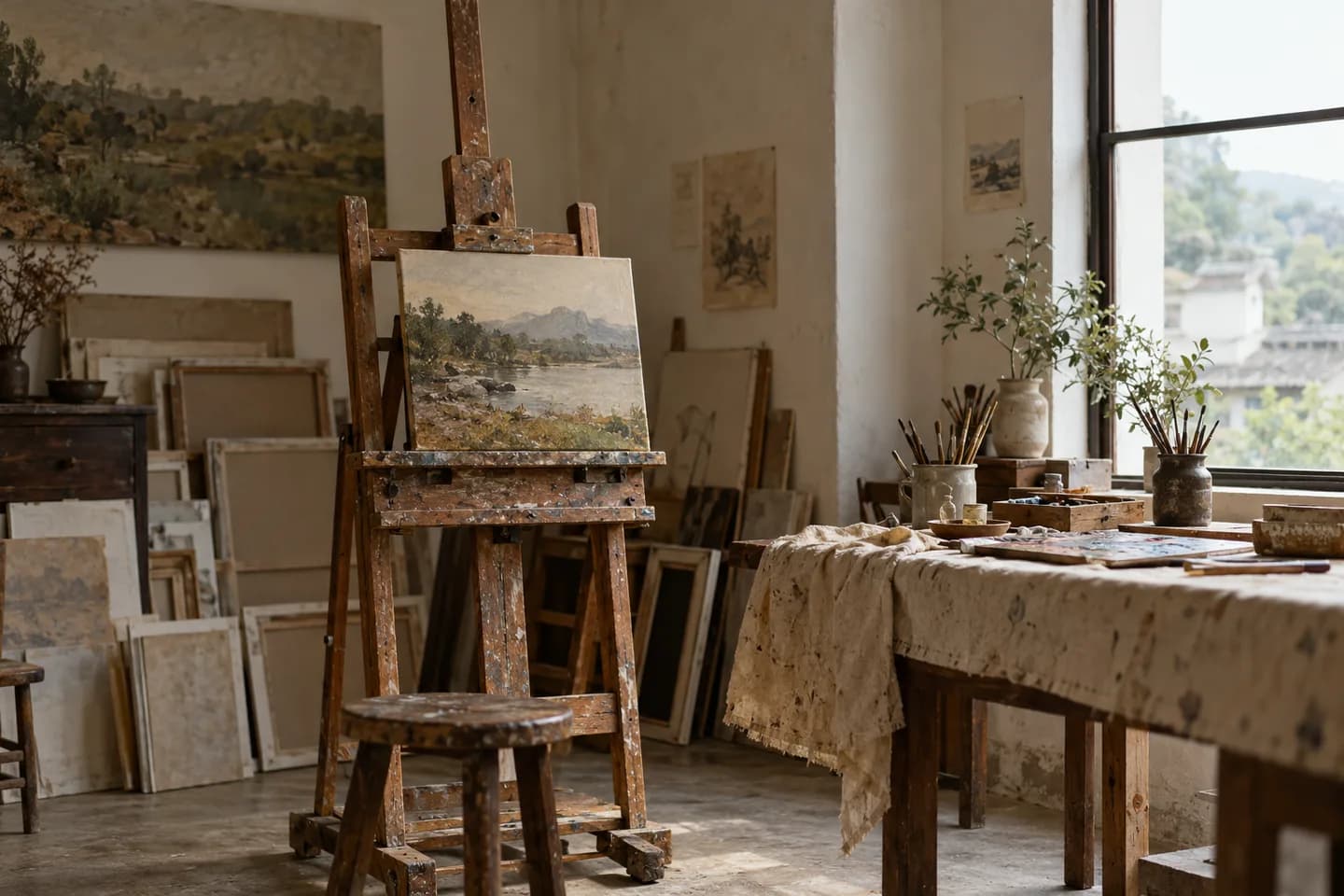
Measure the available wall
Measure the clear width and height, including the space between shelves, doors, switches and other objects. Note the width of any sofa, console or desk beneath the painting. These measurements describe the setting; they do not mean the painting should fill the entire wall.
Compare shapes before committing to dimensions
A vertical composition, a square and a wide landscape occupy a room differently. Use removable paper templates at two or three candidate sizes and look from the entrance and normal seating position. For example, compare a 40 × 60 cm template with a 60 × 80 cm template, without treating either as a universal rule.
Separate canvas size from framed size
The width of a frame adds to the overall dimensions. Ask for both canvas dimensions and the outside dimensions after framing, along with any fitting or hanging requirements. A framed work that fits the wall must also pass through the intended doorways and delivery route.
Use a room preview as a comparison
A digital preview is useful for comparing options, but room photography, perspective, screen size and image cropping can affect the impression. Confirm physical measurements in the quotation. If a new canvas size changes the composition, ask the studio to explain that adjustment before production.
What should I send with a size enquiry?
Send the artwork link, the clear wall measurements, furniture dimensions, preferred canvas size, frame preference and a photograph taken as square to the wall as possible. Avoid including private documents or people in the photograph.